What Kristen’s 21-Pound Transformation Actually Looked Like
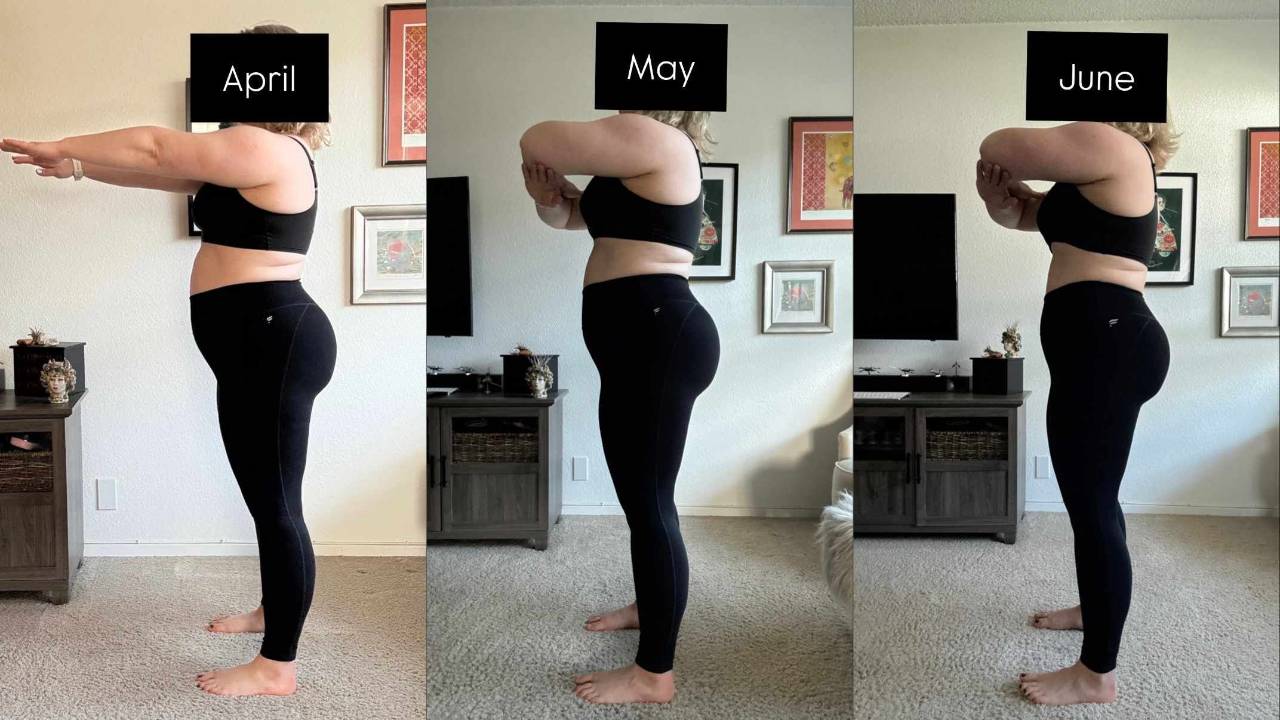
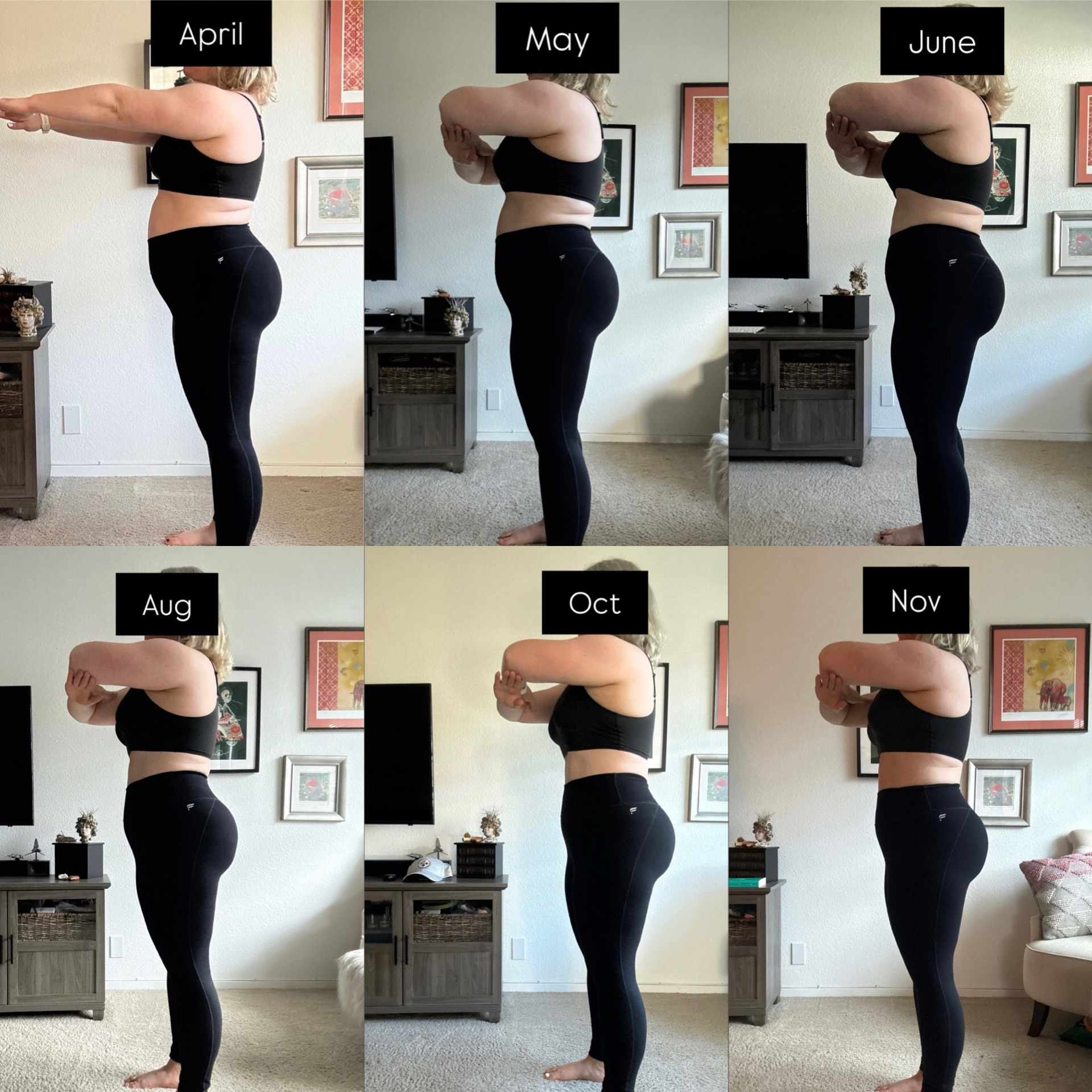
If you looked at Kristen’s April and November photos side by side, you’d see a pretty incredible transformation (see below for proof).
More than 20 pounds lost.
11.5 total inches gone.
But those numbers don’t tell you the most important part of her story.
Because there was a stretch in the middle where Kristen wasn’t sure much of anything was happening.
In fact, by October, she had given it a name:
Plateau purgatory.
And this is exactly why I want to share her story.
Because most transformations get told backward.
We show you the before photo.
We show you the after photo.
We tell you how much weight someone lost.
What you don’t see is what happened during the months when the scale barely moved.
You don’t see the moments when someone has to decide:
Do I keep going even though I’m not getting the feedback I want?
That’s where Kristen’s transformation really happened.
It started before she was even willing to take a picture
In March, Kristen began increasing her daily movement from roughly 5,000–6,000 steps to 10,000–12,000 and started strength training three times per week.
There were no progress pictures.
There were no measurements.
There wasn’t even weight data.
She was afraid to collect it.
That matters, because when you look at the photos now, it’s easy to assume she started this process feeling confident and committed.
She didn’t.
She started where a lot of women start: knowing she wanted something to change, while also feeling uncomfortable confronting exactly where she was.
In April, she began tracking her meals and finally started taking photos, measurements, and recording her weight.
In May, she increased her strength training to four days per week and added two sprint interval sessions.
Her nutrition targets were:
140g protein / 160g carbs / 65g fat / approximately 1,785 calories
And nine weeks in, things were moving.
Her weight had gone from 217 pounds to 207.1.
She had lost 5.25 inches.
Her VO2 max had improved.
Her seven-day nutrition averages were almost dead-on with her targets.
At that point, Kristen wrote:
“I will ride this wave for as long as I can. Now the month resets.”
That sentence becomes much more interesting when you know what happened next.
Because eventually, the wave stopped feeling like a wave
Here’s how her weight changed over the following months:
-
April 5: 217
-
May 1: 213.2
-
May 29: 207.1
-
June 30: 204.7
-
August 1: 200
-
September 1: 200.8
-
October 6: 197.9
-
November 4: 195.7
There was progress.
But it didn’t happen at the same rate every month.
By late summer and early fall, the exciting early drops had slowed considerably.
August.
September.
October.
Three months of doing the work without getting the dramatic scale feedback she had gotten at the beginning.
At one point, Kristen realized that if she looked only at the scale, it appeared she had lost about 3.2 pounds in 90 days.
Her words:
“Plateau purgatory… and it’s been a real mind fk.”**
Of course it was.
This is the part where previous versions of Kristen would have assumed the plan had stopped working.
And this is also the part where a lot of people start changing everything.
Cut calories again.
Add more cardio.
Eliminate carbs.
Start a new challenge.
Decide their body is somehow resistant to weight loss.
Or simply quit because putting in this much effort without seeing the scale cooperate feels terrible.
Kristen did something different.
She looked at the rest of the data.
The scale wasn’t telling the whole story
Because Kristen had continued taking measurements, she could see that her body was still changing.
Her combined bust, chest, waist, and hip measurements went from:
171 inches in April
to
159.5 inches in November.
That’s 11.5 inches lost.
And because she was weighing herself regularly instead of using one random weigh-in as the verdict on whether everything was working, she could see that her moving weight average was continuing to trend downward too.
The progress was slower.
But it was still progress.
Her mantra during October became:
“Things are still changing. I’m still moving forward. It’s all just part of the process. I am trusting the process.”
This is something we talk about constantly in coaching.
You need enough information to be able to distinguish between:
“This isn’t working.”
and
“This is slower than I want it to be, but it’s still working.”
Those are two very different problems.
And if you mistake one for the other, you can spend months trying to fix something that was never broken.
Then we told her to eat more
After seven months, Kristen started her third diet break.
Her calories increased by about 200 per day, bringing her targets to approximately:
140g protein / 210g carbs / 75g fat / 2,075 calories.
And something interesting happened.
Her weight started dropping again.
She also got hungry.
Which surprised her, because during September and October she would have told you she felt perfectly satisfied.
One week into eating more, she wrote:
“My scale weight has started dropping again and I’m hungry!! It’s really blowing my mind.”
Now, I want to be careful here because this is where social media likes to turn things into catchy nonsense.
Eating more does not magically cause weight loss.
Kristen didn’t suddenly discover that calories don’t matter.
A diet break is a strategic period of bringing calories back up—often closer to maintenance—after spending a significant amount of time in a calorie deficit.
It gives you a physical and psychological break from dieting.
And after months of focused fat loss, sometimes that break is exactly what we need before deciding what comes next.
For Kristen, it also reinforced something much bigger:
The answer wasn’t always to push harder.
Sometimes the next right move was actually to eat more.
“Previous versions of myself would have quit.”
This may be my favorite thing Kristen has written about this entire process:
“Previous versions of myself would have quit as soon as the scale stopped moving. This version of me keeps going and I guess she starts eating more.”
That is the transformation I care about just as much as the one you can see in her photos.
Because yes, Kristen lost 21.3 pounds by early November.
Yes, she lost 11.5 inches.
Yes, her body looked dramatically different.
But she also learned how to stay in the process when the process stopped constantly rewarding her.
She learned how to use data without letting one number dictate her next decision.
She learned that more effort isn’t always better effort.
She learned that a slower month doesn’t require a new plan.
She learned how to assess what was happening, adjust when necessary, and continue.
And then December gave her a chance to prove that those skills were actually becoming hers.
December looked completely different
By December, Kristen’s attention shifted away from fat loss and toward recovery.
Her HRV was low.
Her energy was low.
Her sleep duration was fine, but it wasn’t restorative.
And for the first time in months, she backed off.
She stopped weighing herself every day.
She didn’t track consistently.
Her step goals basically disappeared.
She made cookies.
She ate the cookies.
She had wine and cocktails.
She even took her watch off for almost an entire week.
If you’ve spent years in an all-or-nothing cycle, that can feel terrifying.
Because the fear is always:
If I loosen my grip, am I going to lose control completely?
Kristen didn’t.
She kept a few anchors in place.
She continued strength training four times per week.
She ate regular meals.
She prioritized sleep and recovery.
And at the end of the month, she had essentially maintained.
Her weight was:
-
December 1: 198.4
-
December 31: 199.3
Less than a pound difference.
No catastrophe.
No “I blew it.”
No need to start over on January 1.
And yes, the scale was higher than her November low
By early November, Kristen had reached 195.7 pounds.
At the end of December, she was 199.3.
So if you only looked at that number, you could tell yourself she had “gained back” a few pounds.
But that would miss the entire point.
Because fat loss is not supposed to be one uninterrupted downward line forever.
There are times to push.
There are times to maintain.
There are times to take a diet break.
There are times when your recovery, energy, sleep, and stress need more attention than your calorie deficit.
The skill is knowing which season you’re in without interpreting every change in strategy as failure.
Kristen wrote that thoughts of “you’re failing” had crept in repeatedly over the previous two months.
But instead of reacting to them, she kept reminding herself:
I’m still moving forward.
That took a different type of discipline.
Not the discipline to eat less.
Not the discipline to hit a perfect step count.
The discipline to resist panic.
And then something else happened
By the end of December, Kristen’s HRV had moved back into her balanced range.
Her sleep was finally restoring her energy again.
Her steps naturally climbed back above 10,000 per day.
And she started tracking her food again.
Not because she was immediately trying to hit anything specific.
She just wanted to see where she was.
And without deliberately trying to do it, she landed right around her fat-loss macros.
That’s a pretty big deal.
Because months earlier, tracking, weighing, steps, macros and routine were things Kristen was consciously practicing.
By December, some of those behaviors were beginning to happen without nearly as much thought.
She hadn’t “fallen off.”
She had learned how to turn the dial down.
And now she knew how to turn it back up.
This is the transformation
It’s easy to look at Kristen’s April and November photos and make this story about weight loss.
And her physical progress deserves to be celebrated.
She stepped on the scale in February 2025 and saw 220 pounds.
By the end of the year, she had lost more than 20 pounds from that starting point.
From April through December, she was down 17.7 pounds and 11.5 inches from her bust, chest, waist, and hips.
Her fitness improved.
Her body changed.
But I think December tells us even more about what happened than her lowest weigh-in does.
At the beginning of this process, Kristen was too afraid to take progress photos or regularly step on the scale.
By the end of the year, she could spend a month doing less, watch the scale fluctuate, eat cookies, skip her step goal, take off her watch and understand that none of it meant she had failed.
She didn’t need a January challenge to rescue her.
She didn’t need to compensate for Christmas.
She didn’t need to punish herself for drinking a cocktail.
She didn’t need to wait for Monday.
She just resumed.
And that might be the most important part of her entire transformation.
Because losing weight is one skill.
Knowing what to do when fat loss slows down is another.
Knowing when to eat more is another.
Knowing how to maintain when life or your body needs something different is another.
And knowing how to return to your routines without turning it into a dramatic restart?
That’s the skill that makes everything else much more likely to last.
Back in October, Kristen wrote:
“Just because the mountain gets steeper doesn’t mean I need to stop.”
By December, she had learned something else too.
Sometimes you don’t need to keep climbing.
Sometimes you hold your ground, recover, and then keep going.